
Arthur Willis
Born 30 October 1840, and baptised at St. Andrew-the-Great 28 November 1841, son of Professor Robert Willis. Died at his home, Alltysrech House, Treboth, Glamorgan, 22 May 1881.
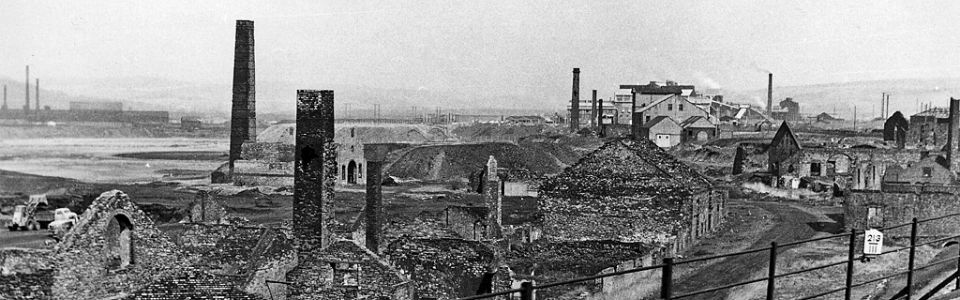
He was educated at the Royal School of Mines, and became the chemist at the Landore Siemens Steel works near Swansea, from about 1869 until his death:
Mr. Arthur Willis, who died at Swansea on the 22d May at last, was a son of the late Professor Willis, M.A., F.R.S., of Cambridge, and was for twelve years chemist to the Landore Siemens Steel Co., in which capacity he distinguished himself in several matters of original research. The deceased, as the first chemist of the first works established for the carrying on of the open–hearth process, had to open up a comparatively new field of investigation, acquiring knowledge and experience that he was never slow to communicate to others. He was elected a member of the Iron and Steel Institute in 1877, but his only communication to the Institute was that contributed to the meeting in May 1880, on "Reactions in the Open-hearth Process." Deceased was a distinguished student at the Royal School of Mines, where he was a pupil of Hoffman, Percy, and Smyth. One to whom he was well-known writes that "he was a most careful and exact analyst, and devised many methods by which the determination of sulphur, phosphorus, manganese, &c., was more rapidly and more accurately arrived at in pig-iron. He did not, however, publish many of his researches, as his duties in connection with the Landore Works took up all his time, and of late years his health not allow of his doing any night work." The Journal of the Iron and Steel Institute, 1881, p576
Reactions in the Open Hearth Process. A short paper thus entitled was read by Mr. Arthur Willis, F.C.S. Landore Siemens-steel Works, Swansea. Mr. Willis observed that he found, after long experience, that steel from different brands of haematite pig-iron, chemically the same and made from the same ores, not only acted differently in the furnace, but in a finished state showed a marked difference in their tensile and other tests. Experiments made at Landore showed that no metal added to the bath of steel had the slightest effect as far as the elimination of sulphur was concerned, and that manganese was the only metal which would counteract it. Tungsten alloyed with steel appeared to harden without detracting from its toughness, but he doubted whether the advantage gained compensated for its cost. In steel supplied to a Cornish mining company from Sheffield for borers he found as much as 10 per cent, of tungsten. As to the two great processes for making steel, the Bessemer and the Siemens, he held it would be generally con- ceded that for soft steel the latter carried off the palm, and this he attributed to the complete elimination of the silicon, to the mixture of different brands of pig, and to the absolute certainty with which the carbon in the finished steel could be controlled. Sheffield Independent, Friday 07 May 1880
Author of Estimation of Manganese in Spiegel Eisen.
He seems to have married Cecilia Amelia 'Lilla' Briscoe. She was born in New York in about 1845, and is recorded in the 1871 census as Cecilia Amelia Willis, married, aged 26, though there is no sign of Arthur and the marriage is not registered (at Cardiff) until 1873. In 1881 they are both at Alltysrech House, Clase, Glamorgan, a few weeks before Arthur died. Also with them is Agnes V Willis, recorded as their daughter, but she actually seems to be Charles Whewell Willis's daughter. Lilla seems to have married again to Joseph Evans Eustance and is with him in 1891 and 1901, and is widowed again in 1911. Her death was registered at Cardiff in the last quarter of 1936.